
In-Home Physical Therapy for Functional Mobility After Brain Injury
A brain injury can affect balance, coordination, walking, and everyday movement in different ways. MoveStrong Seniors provides private-pay, one-on-one physical therapy in the home to help adults work on steadiness, functional mobility, and confidence at a pace built around their individual abilities and goals.
One-on-one care • In your home • Palm Beach & select Broward communities
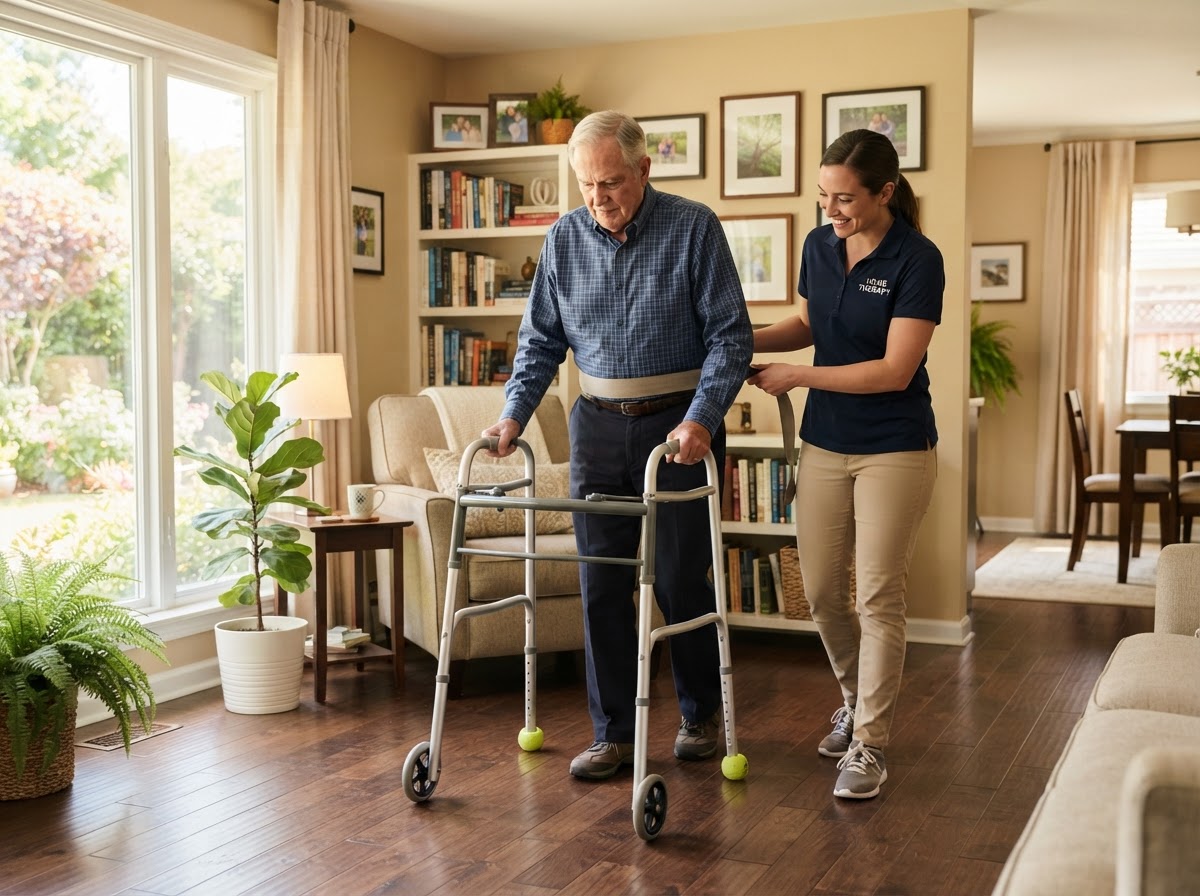
How a Brain Injury Can Affect Everyday Movement
A brain injury can influence movement and coordination in different ways depending on the person and the nature of the injury.
Balance Changes
Steadiness and postural control may be affected, especially when standing or turning.
Coordination Difficulty
Controlled, precise movement can become more challenging for everyday tasks.
Walking Changes
Stepping, gait pattern, or steadiness while walking may be affected.
Reduced Strength
Weakness or changes in muscle activation can make movement feel harder.
Transfer Difficulty
Getting in and out of chairs, beds, or the car may require more effort.
Reduced Endurance
Activity tolerance may be lower, making daily routines more tiring.
Understanding which movements are most affected helps shape an individualized plan. Learn more about our in-home physical therapy services.
What Physical Therapy May Work On
Each plan is built around the person’s current abilities, goals, and the everyday movements that matter most to them.
Walking & Gait
Work on stepping quality, weight-bearing, and safe movement through the home.
Balance
Exercises and strategies designed around steadiness and postural control.
Coordination
Practice controlled, precise movement for everyday functional tasks.
Strength
Focus on the muscle groups that support everyday movement and stability.
Transfers
Practice getting safely in and out of chairs, beds, and other everyday positions.
Endurance
Gradually build tolerance for walking and daily activity based on current abilities.
Functional Mobility After Brain Injury
Treatment focuses on the everyday movements that support independence and safety at home.
Balance & Coordination
When balance or coordination has been affected, physical therapy may work on steadiness, controlled movement, and safe mobility through individualized exercises. Progress depends on the individual and the nature of the injury, and no program can promise neurological recovery.
Building Activity Tolerance
Endurance and activity tolerance are often part of recovery after a brain injury. Physical therapy may include gradual progression based on the person’s current abilities, with pacing tailored to each individual rather than a rigid protocol.
Rebuilding Functional Movement in Familiar Surroundings
After a brain injury, balance, coordination, and attention can all influence how someone moves through their day. Practicing in the real home lets the therapist address those demands in the spaces where they actually occur.
Brain injury can affect more than strength — it may also influence coordination, the ability to divide attention while moving, or tolerance for navigating more complex spaces. Working in the home lets the physical therapist layer those demands into real tasks: turning down a hallway, moving through a doorway while carrying something, or getting up from a low chair.
When clinically appropriate, sessions may also include dual-task or attention-based movement practice, always tailored to the person’s current abilities and goals rather than a fixed protocol.
Cognitive & Communication Support After Brain Injury
Some people experience cognitive or communication changes after a brain injury. When clinically appropriate, MoveStrong Seniors also provides in-home speech therapy to support those needs alongside physical therapy.
Related Support for Balance and Confidence
Balance and steadiness are often a key focus after a brain injury. Learn more about our balance and gait physical therapy or our fall prevention physical therapy.
Private-Pay Care With More Personal Attention
MoveStrong Seniors offers private-pay, one-on-one visits delivered directly in the home. Each plan is personalized, communication stays high-touch, and care is centered around the client’s goals and everyday routines.
MoveStrong Seniors does not bill Medicare or insurance. This private-pay model allows every session to be unhurried and individually focused. Learn more about MoveStrong Seniors and our approach to care.
Serving Adults & Seniors Across Palm Beach and Broward
MoveStrong Seniors provides in-home brain injury physical therapy throughout Palm Beach County and select Broward County communities, including Boca Raton, Delray Beach, West Palm Beach, Parkland, Weston, and other communities in the service area.
Brain Injury Physical Therapy FAQs
Common questions about in-home physical therapy after a brain injury.
Looking for more general answers? Visit our frequently asked questions page.
Working on Movement After a Brain Injury? Let’s Talk.
If balance, coordination, walking, or everyday mobility have changed after a brain injury, our team can help you determine whether in-home physical therapy may be appropriate.